Multiple spreadsheets.
No unified financial command center.
I'm Ryan Lake, a habitual number cruncher. A financial plan keeps me focused, on track and moving forward, and I'll admit I obsess over mine a little too much. After all, failing to plan is planning to fail. That obsession exposed a huge gap in financial software, so I built FinCommand to fill it.
Disconnected tools can't deliver connected outcomes.
Every month, without fail, I wrote down my income and expenses by hand, added them up on a calculator and typed the totals into an Excel spreadsheet. I have done it religiously since 2013. Then I started tracking real estate the same way, and later, stocks. Real estate moves slowly; stocks move fast.
I had great spreadsheets. What I never had was real-time, dynamic integration between them. Excel could not give me a unified dashboard with the beauty and the functionality I needed to make the biggest decisions with accurate information.
Then came the tabs. A mortgage calculator on my phone. A real estate deal analyzer. Stock research websites. Retirement simulators built for Americans. Google Forms and DocuSign to manage tenants. Budgeting apps whose bank connections never quite connected. I wanted every major financial tool in one ecosystem, with no industry gatekeepers, not a dozen browser tabs and a dozen logins.
I didn't learn this from a screen.
I've been investing in real estate for 18 years, almost half my life. I've done extensive renovations, put money into funds for yield and equity, and lent to other investors. I've lost some and won some, and I learned a ton from some of the best in the business. Their strategies inspired many of the tools now built into FinCommand.
By 32, I owned eight properties with 13 units, managed from multiple provinces. I couldn't be everywhere at once, so I outsourced talent and used online tools to leverage my business.
Real estate taught me patience. Stocks taught me conviction.
After the financial crisis, I knew something was wrong. I wanted my investing in my own hands. The pattern I kept seeing was simple: budget, control your spending, save. Then own a business or invest. I started with real estate.
I still love real estate. But it's a long, slow, steady play, not the fastest way to build wealth.
About five years ago I started buying stocks, and I studied hard with the help of a mentor. In 2021, one position fell 70 to 75%. That is enough to shake most investors out, and it was the most painful and the most useful lesson I've had. I bought more on the way down. What kept me from selling was conviction and research. Holding that conviction despite the negative sentiment was the hard part, because I didn't have the right tools for it.
My success today can look like luck on the surface, because that stock turned into a 10x-plus investment. It could just as easily have gone the other way had I sold, or bought, at the wrong time. Every day you hold a stock is a decision not to sell. Conviction and a plan are what let you ride out high-beta names.
I spent $5,000 USD on courses to learn the ropes, then built the best of what I learned into FinCommand. That's why my own research and projection system lives inside it, so you don't have to struggle and spend money building your own.
My story, not advice. Investing carries risk, and past results don't predict future ones.
So I built what I couldn't buy.
I shaped this tool around my own day: how I track money, and how I bring everything into one ecosystem. One command centre. With the help of AI, it pulls the real estate pro formas and the investing methods I trust into one place, and I use it every day.
While my financial life may be more complex than most DIY investors', there is something here for the majority who don't have that complexity. Stocks and real estate are separate modules, so use them or skip them. What everyone should track is profit and loss in a monthly budget, net worth, and a retirement planning tool. I'd argue for one more: putting credit cards to work.
FinCommand is
- One private command centre for your whole financial picture
- Focused on Canadians, applicable to investors worldwide
- Made by an avid DIY investor who uses it every day
- A beta project in ongoing development, getting better all the time
FinCommand is not
- A licensed financial advisor or a stock-picking service
- A get-rich-quick tool
- US software with a CAD button
- Finished. Some corners aren't polished yet, and early members help shape it
Why I wrote the book.
Once people see what's possible with their finances, life gets more exciting. I wrote Health, Wealth, and Real Estate to give back some of what I learned the hard way, especially in real estate, with a more philosophical approach and a historical look at the typical Canadian retirement. I hope you enjoy the read.
A book gets read once. A tool gets used every day. That's why I built FinCommand too, and I hope you get as much use out of it as I do.
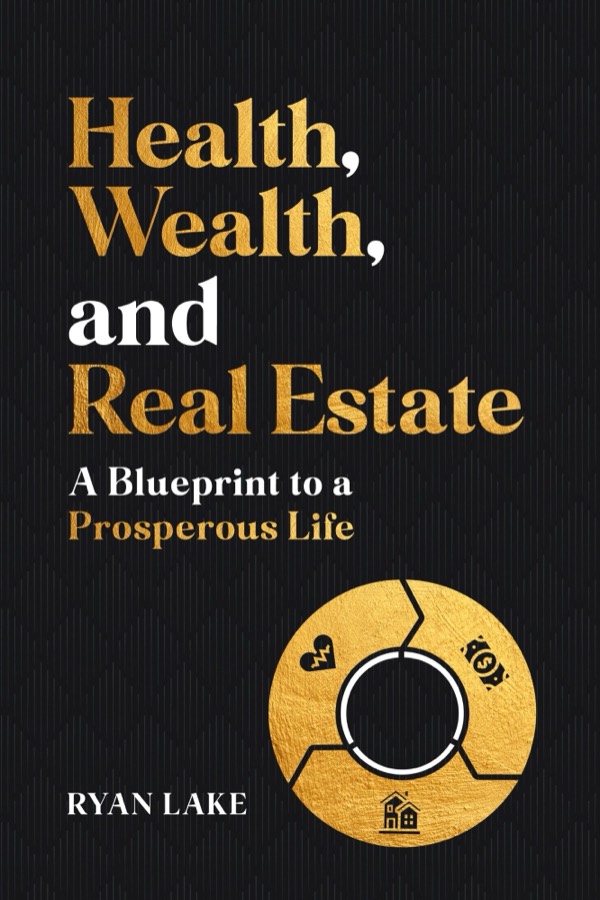
Health, Wealth, and Real Estate
A Blueprint to a Prosperous Life
Real estate lessons from a small-town Saskatchewan start, the link between money and health, and a look at how retirement works in Canada.
Get it on Amazon.ca →See your whole picture in one place.
14 days free · $0 today · then $14.99/mo · Cancel anytime
FinCommand is a tool, not a licensed financial advisor. Stories on this page are my own experience, not advice.